I. Practice: A new cinematic language
I make AI-native films and moving-image works. By AI-native I mean a cinema whose grammar — its shot logic, performance, mise-en-scène, the very texture of a face caught at 24 fps — is built from the ground up using generative systems, rather than retrofitting AI onto a conventional production. The premise is not that AI replaces the filmmaker; it is that it produces a different kind of filmmaker, one whose authorship lives in prompt, reference, iteration, and curation as much as in casting and blocking.
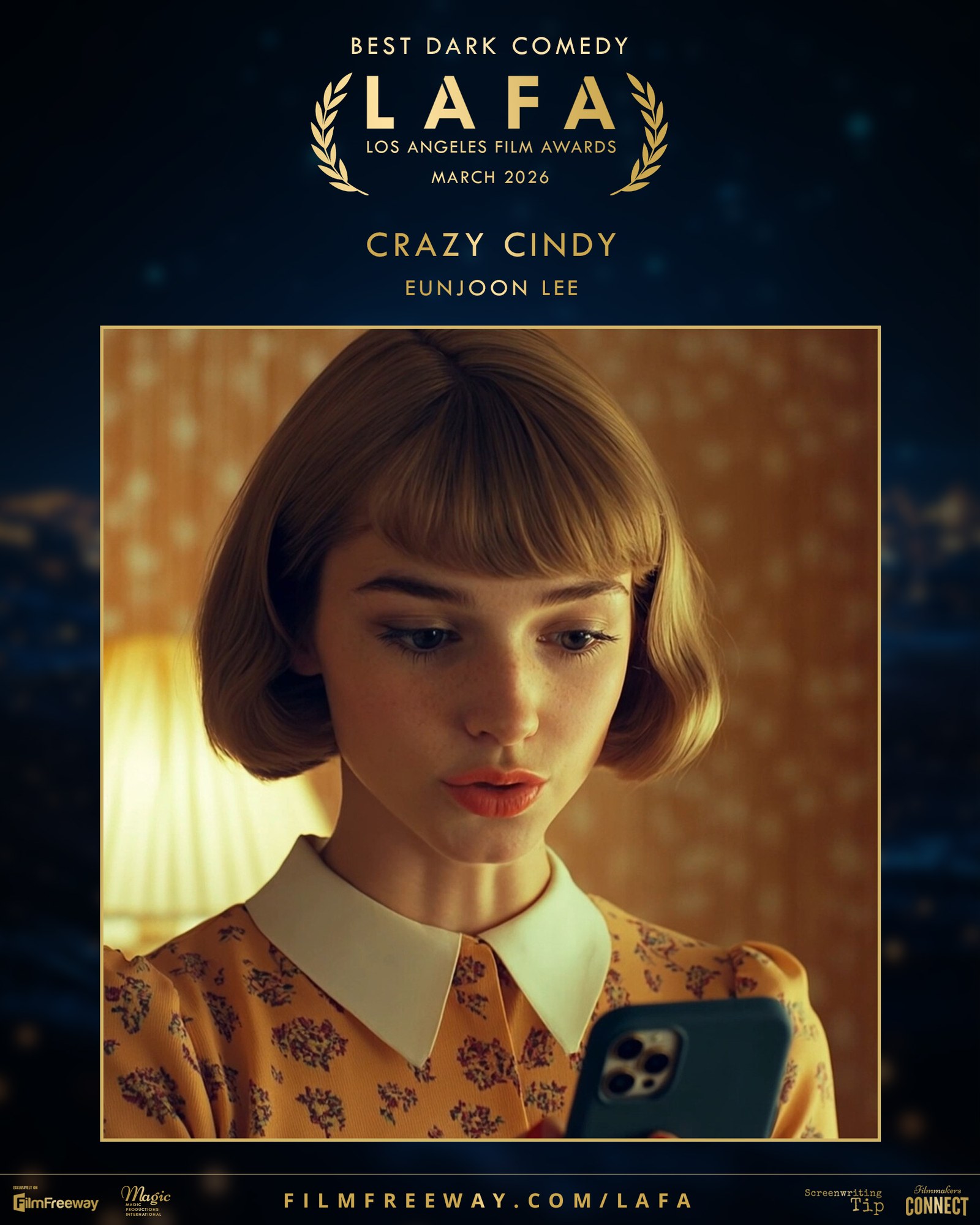
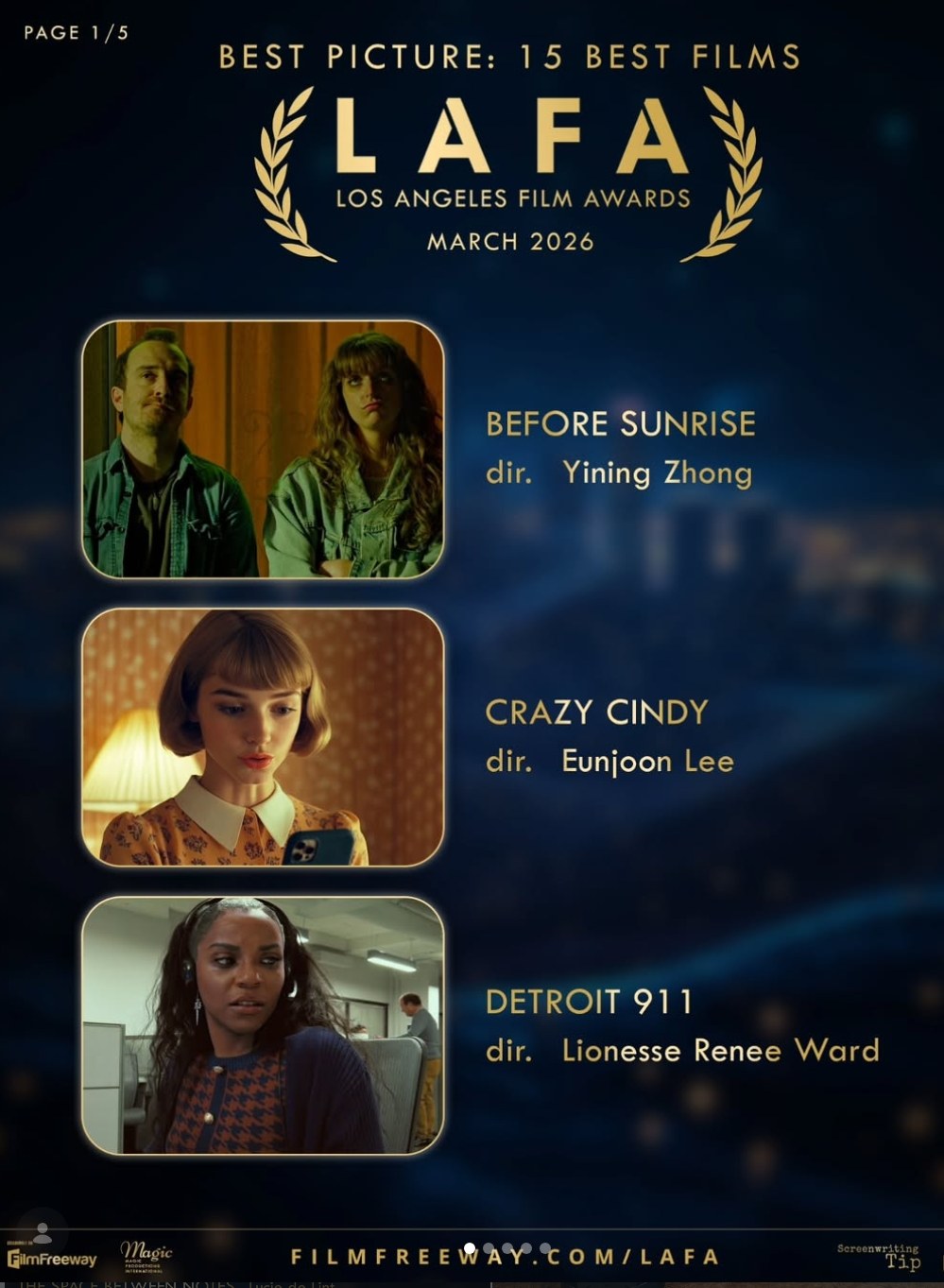
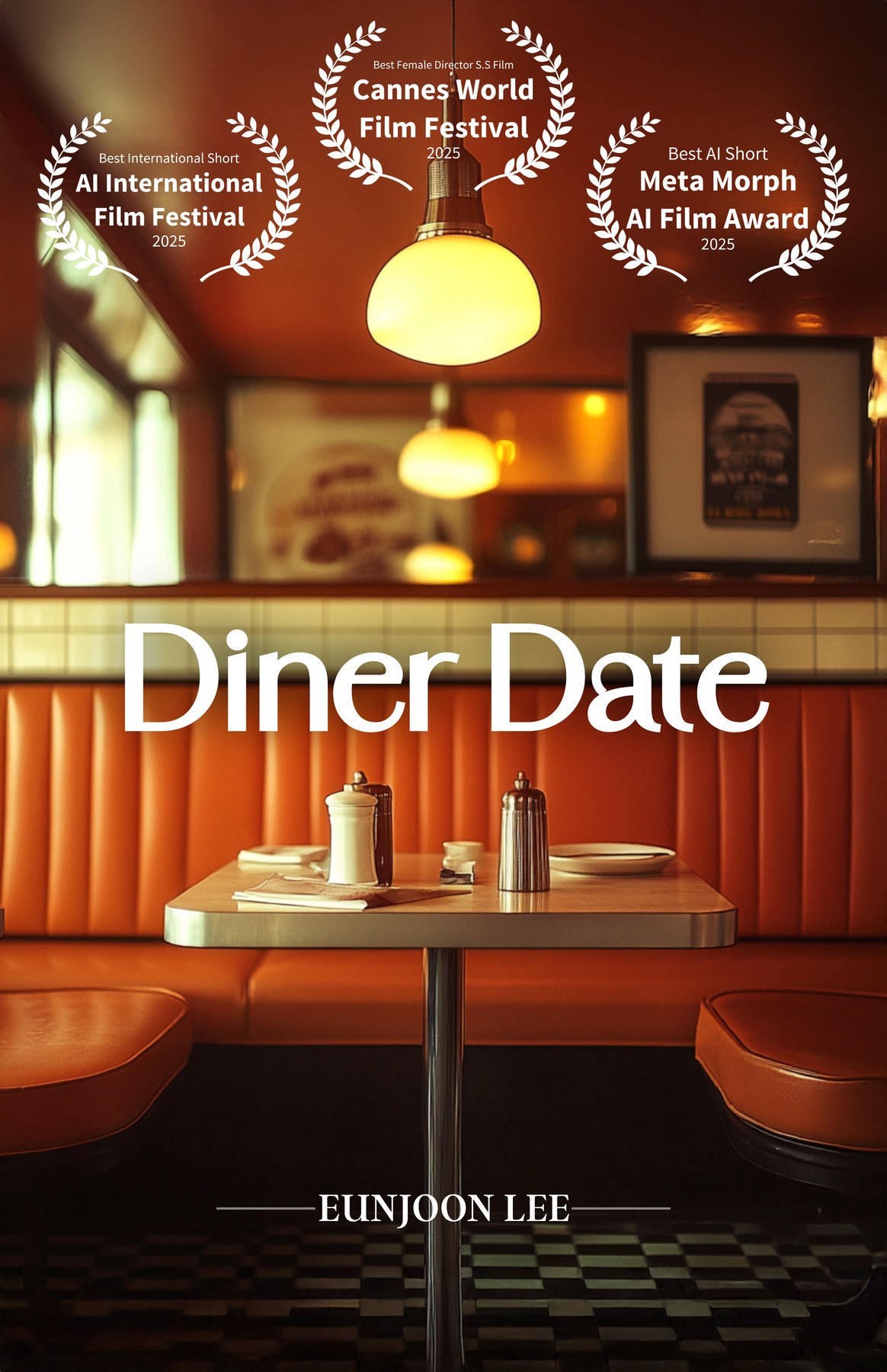
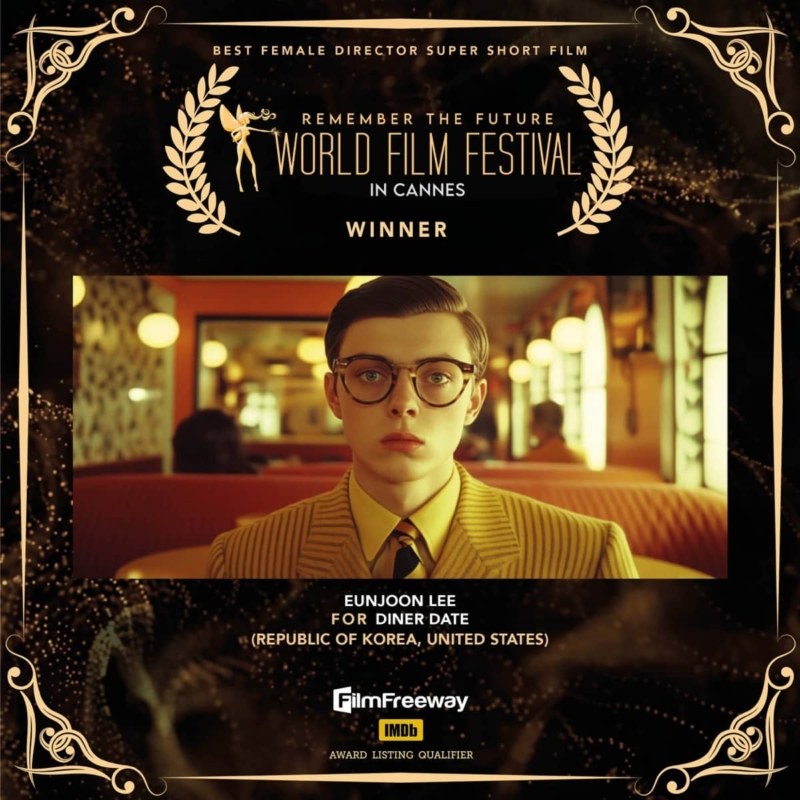
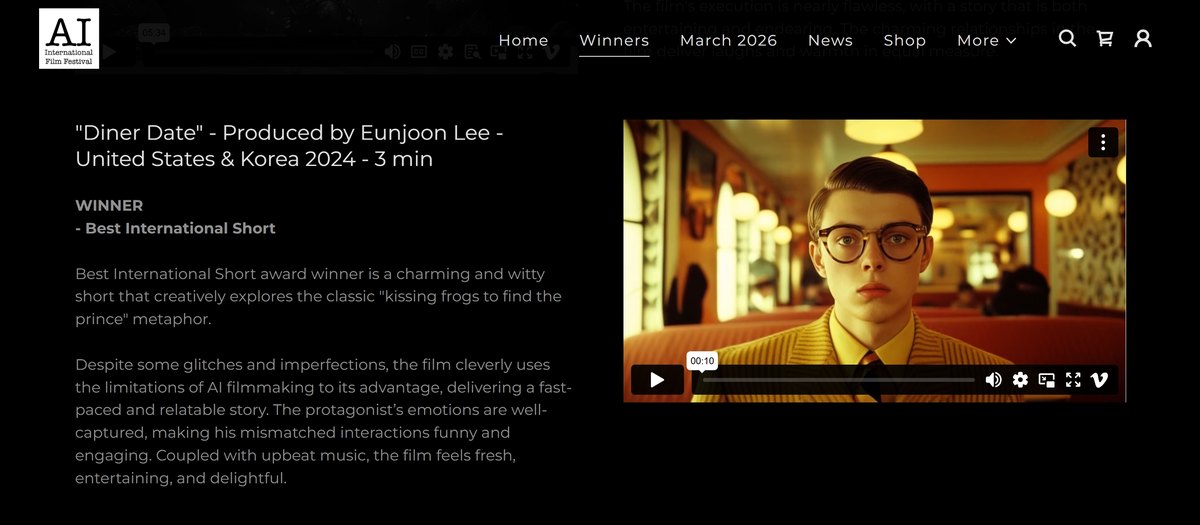
The three films currently anchoring this practice — Crazy Cindy (2026), Diner Date (2024), and Memory Market (2024) — have collected more than a dozen international awards across the United States, France, Spain, Italy, and the United Kingdom. What the jury statements repeatedly notice is something I plan for: that the film “cleverly uses the limitations of AI filmmaking to its advantage.” I treat AI’s glitches not as failures to suppress but as material to compose with — the way early cinema once treated the jitter of the hand-cranked camera or the grain of nitrate stock.
II. Research: AI as art-historical event
My scholarly writing situates this moment within the longer history of how technology has produced new art. The nineteenth-century portable camera pushed Monet out of realism and into Impressionism; the generative model is doing something analogous to twenty-first-century image-making. My column at the Yonhap News Agency — ten English- language essays and counting, distributed bilingually through Korea’s national wire service — threads this argument across topics ranging from the San Francisco Misalignment Museum to NewJeans’ analog music videos to the EveR 6 humanoid robot conducting at the National Theater of Korea.
The throughline is a question that I think university departments of photography and moving image have not yet answered with any precision: what should we teach, tomorrow morning? If the camera is no longer the irreducible site of capture, what should a curriculum even look like? My peer-reviewed publications on AI art ethics, AR activation, and the keywords of Asian art culture are early attempts to map this terrain.
III. Pedagogy: Teaching at the seam
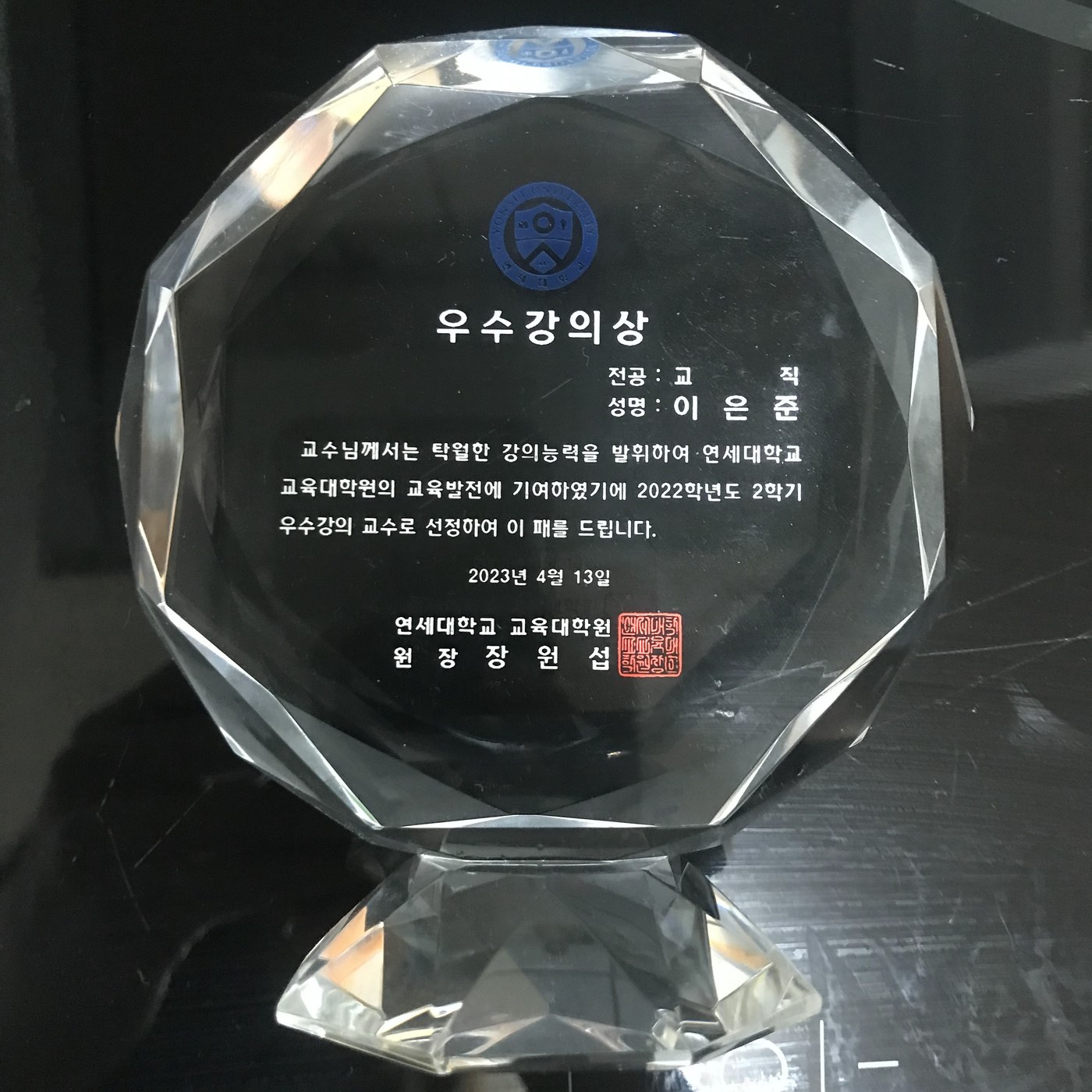
As Assistant Professor in Kyungil University’s Department of Photography & Moving Image — a department founded in 1988 and one of Korea’s longest- running programs in the field — I teach video production, AI moving-image practice, and the theory that frames both. My approach to teaching has been recognized at Yonsei University with the Outstanding Teaching Award (2023). I work with students to build a craft that is fluent in both traditional cinema language and the generative toolkit, and to produce festival-ready films from inside a curriculum that is still being written.
I am most interested in students who treat AI the way good filmmakers have always treated their tools: with curiosity, discipline, and a refusal to mistake the instrument for the art.
“Rather than letting AI dictate the film, I maintained full creative direction, using AI as a flexible tool.” — metaMorph AI Film Award interview · September 2025